
It is always a good idea to save money. Some do it for a rainy day – when the need for emergency cash arises. Others save money with a view to accomplishing their dreams, for example building a dream home, starting a business, buying a car, or to pay for their children’s college fees. Whatever the motivation, it is good to know how to save money.
The most effective ways to save money involve setting clear savings goals, using a budget, relying on the 50/30/20 rule, tracking and reducing spending, reducing avoidable costs, and cultivating habits that continuously grow and protect income.
Note that income is the total money obtained from salary, business earnings, and side jobs. There are several main reasons for saving money. These include to build wealth, to achieve financial independence, to achieve goals, to be financially secure and ready for emergencies, and to reduce stress.
Best money saving suggestions
Unexpected emergencies always happen in life, and having savings helps to reduce stress and minimize budget disruptions. One of the best ways to accumulate wealth is by making small but consistent savings over time. Having to rely on other people is demeaning and reduces our flexibility, while relying on credit is expensive and unreliable.
Having savings increases our flexibility and enables us to grab opportunities when they arise, such as investments and new career paths. As for achievement of goals, having enough savings helps us to pursue and attain both short-term and long-term goals such as building/ buying properties, starting a business, and paying school fees.
Here are the main ways to save money, gain financial independence and flexibility, achieve goals, and accumulate wealth over time.
1. Track Your Expenses
You need to know exactly where your money is going, on a day-to-day basis. The best way to track your expenses is by writing down (on paper or on a digital note) or using an app that tracks daily spending. Each expense tracking method has its advantages and disadvantages. But only then can you effectively reduce or cutoff unnecessary spending.
Saving tip: Pick one or two methods to track your expenses, categorize the expenses (for example into food, rent, transport, entertainment, savings), and review the expenses on a weekly basis. This can be through a review of bank and mobile money statements, the old-school pen and paper, spreadsheets, or a mobile app such as FreshBooks, Pocket Clear, and QuickBooks.
A weekly review of the money spent on various expenses will help you spot spending patterns and adjust or remove any unnecessary spending.
Why daily tracking of expenses helps to save
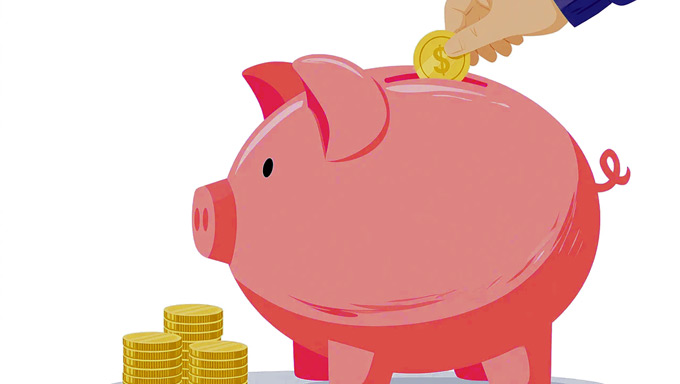
Daily tracking will reveal unnecessary spending, create an awareness of how you are using your income, and will help in the day-to-day budget planning. You should expect to notice some costs that aren’t normally noticed, such as money transfer fees and costs due to not buying in bulk.
Famous people and celebrities are known to save money too. They do it by budgeting, prioritizing value over luxury (needs vs wants), sticking to a strict savings plan, and earning good returns from bond coupon payments.
So-called frugal celebrities include actor Leonardo DiCaprio who has been known to fly commercial, and billionaire businessman Warren Buffett who lives in the same house he bought in 1958.

Most famous birthdays today
Which notable people have birthdays today, and which legends were born on this day? See today's list on the famous birthdays and celebrity biographies website!
Other frugal celebrities are actresses Mila Kunis and Sarah Jessica Parker, NBA star Michael Jordan, singer Ed Sheeran, and Hilary Swank who grew up crunching coupons. Also on the list are actresses Sarah Michelle Gellar, Shailene Woodley and Keira Knightley.
Here are the pros and cons of the four expenses-tracking methods.
1.1: Review of bank and mobile money statements
Pros:
- No need to write things down as you just request for a statement and review.
- Depending on where you live, you may be able to set up automatic statement generation, for example once every 7 days.
- It is easy to choose the review duration, and if necessary, do a month-by-month categorization of expenses and expenditure.
Cons:
- This method is best if most of your spending is through bank cards or mobile money. Otherwise, you may need to combine it with another.
1.2: Using a pen and paper
Pros:
- This method is very appropriate for expenses that mostly rely on cash
- It is a simple and uncomplicated way to track expenses
- The extra effort needed helps create a continuous awareness of the need to save money
- This method does not need any gadgets or extra expenses (some banks charge to create statements).
- It works well in both urban and rural areas.
Cons:
- You need to write down every purchase immediately in order to avoid forgetting some expenses
- There is some effort and time required to record expenses
- There are no automatic totals – you need to have a calculator at hand
1.3: Spreadsheets such as Excel, LibreOffice Calc, Google Sheets
Pros:
- This is a good method for customization and detailed analysis of expenses and expenditure
- You can categorize expenses and spending by amount, date, description etc.
- One can use formulas and charts to reveal more data
Cons:
- You need to manually enter each expense, hence needs both effort and time
- It is good for people who have at least basic spreadsheet skills.
1.4: Expense Tracking Apps
Pros:
- Apps help with automation and are easier to access and use
- Mobile payment platforms should have an app that tracks payments, so it is an automatic method
- Apps should automatically import bank transactions and categorize spending, making the review much easier
- You may get real-time summaries, insights, and bill reminders
- It is easy to set up notifications and reminders in apps
Cons:
- This method relies on technology, including computers/ smartphones, internet availability and reliable electrical power
- You may need to share your banking data and credentials
2. Create a Budget and Stick to it
A budget helps you see exactly where your money goes and prevents overspending. To create a good budget, list your income and expenses. To save money by using a budget, you need to set limits for your non‑essentials and ensure that our expenses include the most important/ essential items such as food, water and electricity, cooking gas, school fees, transport, loan repayments, and mortgage/ rent.

A simple budget should be based on the 50/30/20 rule: 50% of the money should be spent on essential items. 30% can go to other non-essential items such as clothing, monthly internet bundles, monthly subscriptions such as pay TV, gifts, small home appliances, and impulse purchases. The remaining 20% of the money in the budget should go to savings.
Saving tip: People who pay rent and use transport every day may need to increase their spending on essential items while reducing on non-essential items. It is also important for people who have irregular income to save more, and to treat savings as their first expense.
3. Reduce your Utility Costs
Utility costs are the expenses that are incurred while using essential services in the day-to-day living, such as water, electricity, cooking fuel, data/ internet, and garbage and sewer costs. To reduce these costs and save money, you need to make small adjustments with a goal to eliminating wastage.
Behavioral changes also help to save money, for example opening the curtains and using more natural light when working at home instead of switching on the lights, and drying clothes in the sun instead of relying on electric dryers.
For example, one can replace their lighting with more efficient energy-saving LED bulbs, turn off the lights when they are not necessary, and using cooking gas and energy-saving jikos instead of electricity. Using Wi-Fi is usually cheaper than mobile data bundles and turning off background data also helps to reduce internet usage by social media apps while you are not using the phone.
Saving tip: You can significantly lower the water bills by harvesting rainwater, sealing leaks, and recycling as much water as possible. One can reduce power bills by unplugging devices when not in use, using pressure cookers, and switching to energy-efficient appliances and solar powered devices.
4. Prioritize your Needs and Review your wants
Needs are the things that are essential for our survival and well-being. They include food, clothing, shelter, water, shelter, transport, and healthcare.
On the other hand, wants are non-essential items that we desire for entertainment, status, and comfort. Wants include smartphones and laptops, designer clothing, vacations, eating out, and streaming services and TV subscriptions.
To reduce how much you spend on wants, create a monthly budget specifically for your wants, and set aside a small amount for them. You also need to create a shopping list before heading to the market, to eliminate expenses on non-essential wants. Online shopping also increases the temptation to do impulse buying, so lookout for those tempting marketing emails, and SMS and flash sale alerts!
Saving tip: Many people waste a lot of money on wants simply because they confuse needs with wants. A simple way to identify your needs is to remember that needs are the things you can’t live without, wants are optional. If you can wait for 24 hours or more before buying something, then it is most likely a want.
5. Buy in bulk whenever possible
Buying in bulk is particularly effective for staples like grains, beans, rice, and cooking flour. Other items that are cheaper when bought in bulk include soap, salt, sugar, cooking oil, tissue paper, canned goods, toothpaste, shampoo, deodorant, pet food, cleaning items, and batteries. You are looking for items that have a long shelf-life but are needed for day-to-day living.
Saving tip: Buying in bulk saves on frequent transport costs, takes advantage of wholesale prices, and reduces overspending due to price fluctuations. To increase your savings, plan to buy these items when the prices are much lower or when there are discounts.
Buying business items (for reselling) in bulk is also a good strategy to reduce expenses and save more money. But you also need to watch-out for inflated prices especially on e-commerce platforms that are then crossed-out and marked as discounted!
Play Spend Money Games!

Amount to spend: $410Bn
World's richest man, billionaire businessman, engineer and investor
Can you spend all of Elon Musk's net worth in a minute?

Amount to spend: $111.9Bn
Businessman, Microsoft Corp co-founder, author, investor and philanthropist
How can you spend all of Bill Gates' net worth in a minute?

Amount to spend: $200Bn
Centibillionaire, founder of Amazon, businessman with interests in space, A.I., real estate
Spend all of Jeff Bezos money

Amount to spend: $196Bn
French businessman, philanthropist, art collector and investor
Spend all of Bernard Arnault's net worth!

Amount to spend: $100Tn
($100,000,000,000,000)
Spend 100 trillion U.S. dollars in under a minute

Amount to spend: $1Tn
($1,000,000,000,000)
Can you spend a trillion U.S. dollars in a minute?

Amount to spend: $1Bn
($1,000,000,000)
You have a billion U.S. dollars to spend in a minute!

Amount to spend: $1Mn
($1,000,000)
You have a million U.S. dollars to waste on over 60 items
Frequently Asked Questions
Why do we need to save money?
The main reasons for saving money are to build wealth, avoid debt, for financial independence, to achieve short and long-term goals, to be financially secure, to be ready for emergencies, and to reduce stress and improve the quality of life.
Which are the main ways to save money?
The best suggestions on saving money include developing a saving mindset and adopting behavioral changes that help reduce expenses, setting savings goals, and using a budget. Tracking expenses, reducing utility costs, prioritizing needs over wants, and buying goods in bulk, especially when prices are low also helps reduce expenses and build savings. Other ways to save money are cutting recurring costs, opening a high-yielding savings account, avoiding an expensive lifestyle, comparing prices before buying, and reducing food wastage.
What does saving money mean?
Saving money means putting aside some of your income consistently and over time, instead of spending it immediately.
How much of my total income should I save?
It is good to save between 10% and 20% of your income. A good way to save money is to rely on the 50/30/20 rule: 50% of your income should go to expenses on essential items, 30% goes to non-essential items, and the remaining 20% goes to savings.
What is a budget?
A budget is a financial plan on income versus expenses over a specific period. It helps us to manage money, avoid financial wastage, and make savings.
How can I avoid impulse buying?
The best ways to avoid impulse buying are relying on a budget and waiting for at least 24 hours (a day) before purchasing any non-essential items.
Which are the best places to keep savings?
Look for saving options that earn interest with time, for example a high-yield savings bank account, Certificates of Deposit (CDs), SACCOS (Savings and Credit Cooperative Societies), money market accounts, treasury bills, trusted self-help groups, and mobile money wallets.
What items can I buy in bulk to save money?
The best items to buy in bulk are staples like rice, maize, beans, and items we use every day but which have a long shelf-life such as soap, tissue papers, batteries, canned goods, pet food etc.